Sterile processing education and career readiness
A clearer path into sterile processing.
The Sterile Process helps aspiring technicians learn the work, prepare for the CRCST exam, strengthen their study process, and approach the workforce with a plan.
What we do
Support for learning, studying, and moving toward the field.
Choose the part of your sterile processing journey you need help with. Full details, eligibility, pricing, and checkout stay on each dedicated page.
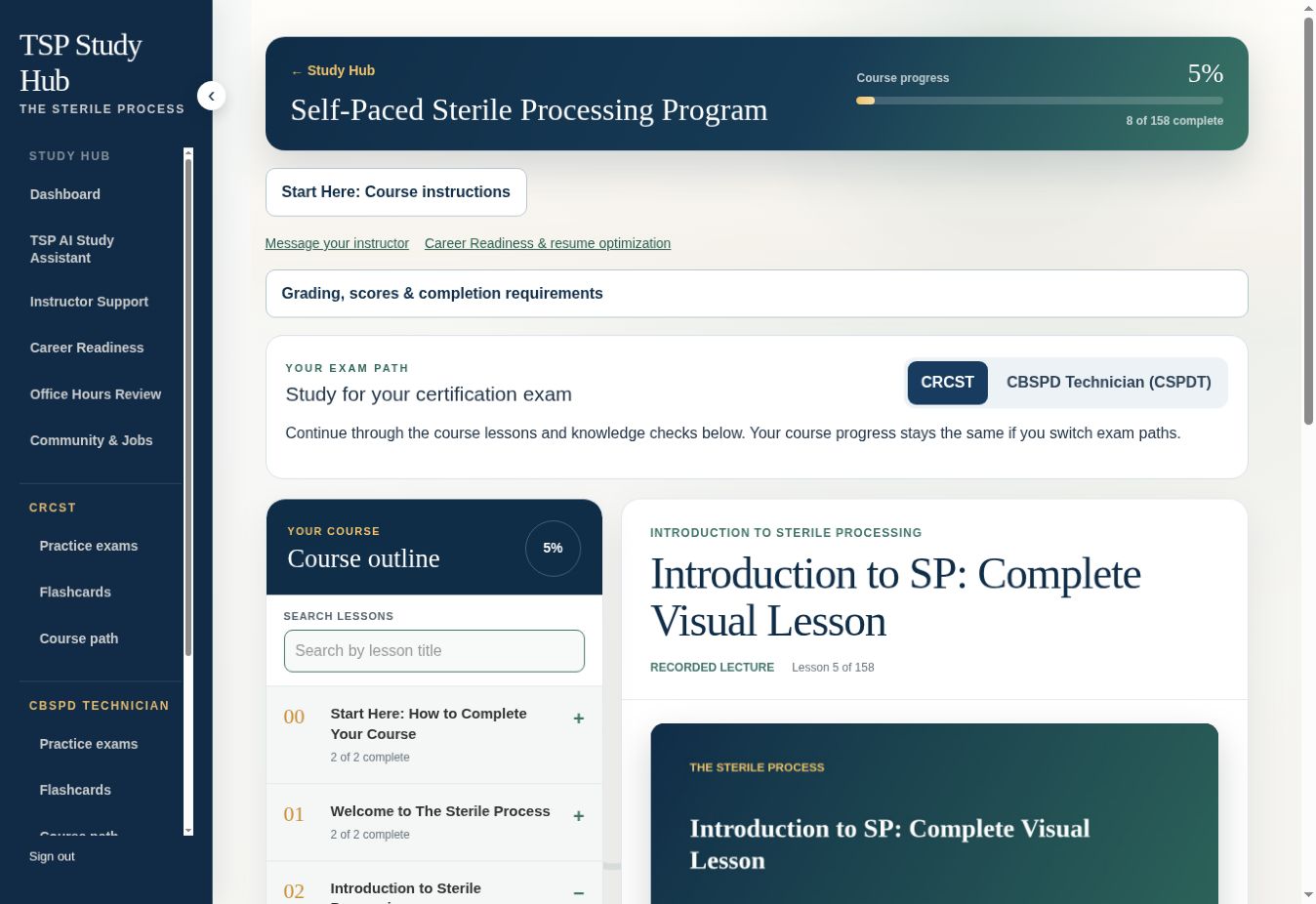
CRCST Training Program
Structured self-paced education for students who need the complete sterile processing learning path.
Explore the program02Exam-Prep Study Tools
Quiz Studio practice exams and Recall Flashcards for students who already have a foundation and need focused review.
Visit the Study Shop03Career-Readiness Support
Resume, interview, job-search, outreach, and 400-hour pathway guidance for the move into the workforce.
Explore Career LaunchInside the department
Precision, responsibility, and a process that never skips steps.
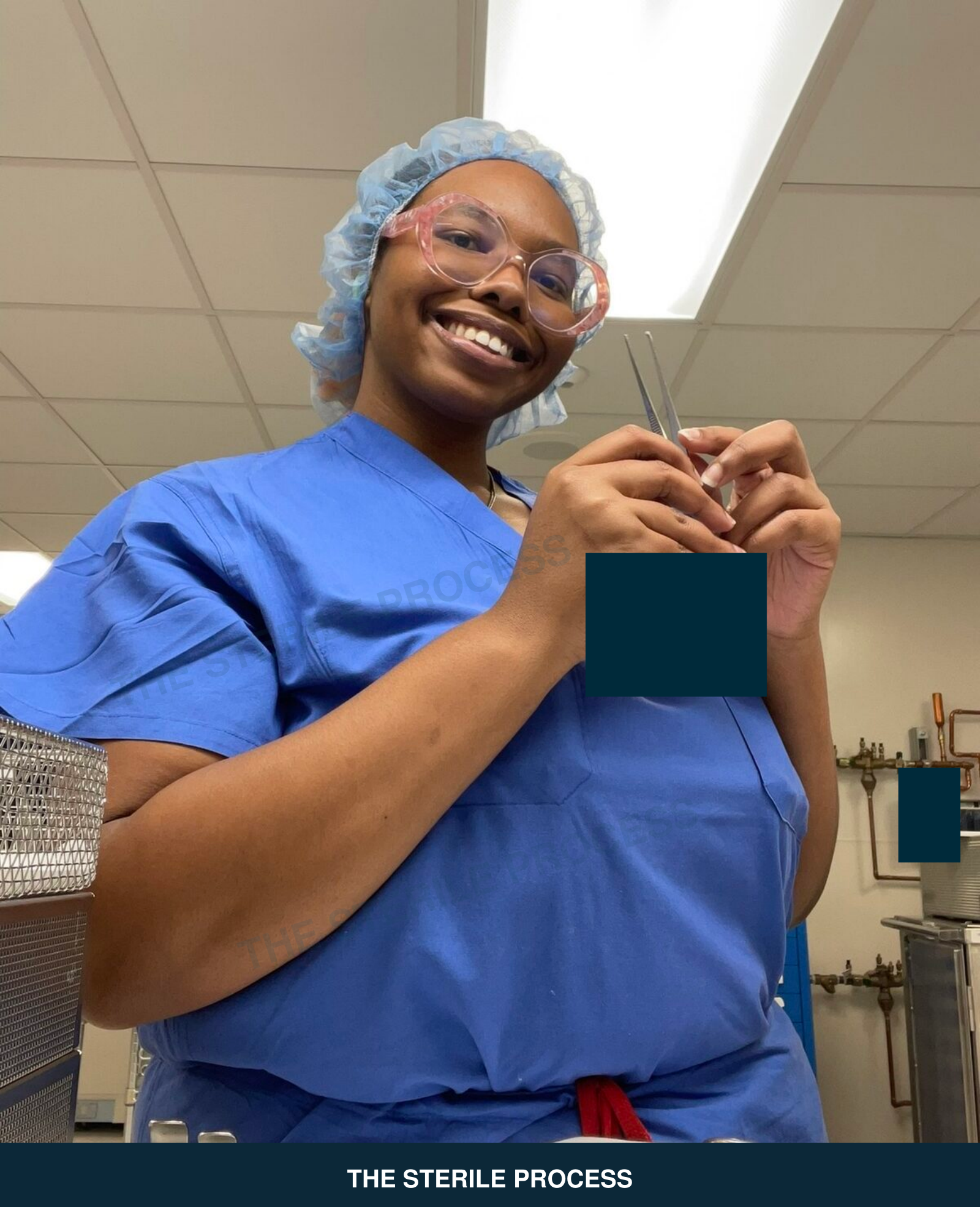
Sterile processing technicians support patient safety behind the scenes. Their work helps ensure reusable medical devices are properly cleaned, inspected, assembled, packaged, sterilized, stored, and ready when clinical teams need them.
Career and pay
See wage information near you.
Federal wage data groups sterile processing technicians under Medical Equipment Preparers. Your actual pay may vary by employer, experience, certification, shift, and location.
Find local openings
Search sterile processing jobs near you.
See what employers are hiring in your area, then use The Sterile Process to prepare for the exam, interviews, and the 400-hour pathway.
Frequently asked questions
Clear answers about entering sterile processing.
What does a sterile processing technician do?
Sterile processing technicians receive contaminated reusable devices, clean and disinfect them, inspect and assemble instrument sets, prepare packages, operate and monitor sterilization equipment, maintain records, and manage sterile inventory for patient care.
Do I need certification to work in sterile processing?
Requirements vary by state and employer. Some employers hire entry-level technicians and allow time to earn certification, while others require certification before hire. Review local job postings and confirm requirements directly with employers.
What are the CRCST 400 hours?
HSPA requires qualifying hands-on experience for full CRCST certification. Candidates may qualify through provisional or full certification pathways depending on when those hours are completed. HSPA determines eligibility and whether submitted hours meet its requirements.
How much do sterile processing technicians earn?
Pay varies by location, employer, shift, experience, certification, and responsibility. Use the salary finder below to review current federal wage information for your area.
Where do sterile processing technicians work?
Common workplaces include hospitals, ambulatory surgery centers, dental facilities, clinics, endoscopy departments, and organizations that reprocess reusable medical devices.
Does The Sterile Process guarantee certification or employment?
No. The Sterile Process provides education, exam preparation, study tools, and career-readiness support. HSPA makes certification decisions, and employers make hiring decisions.